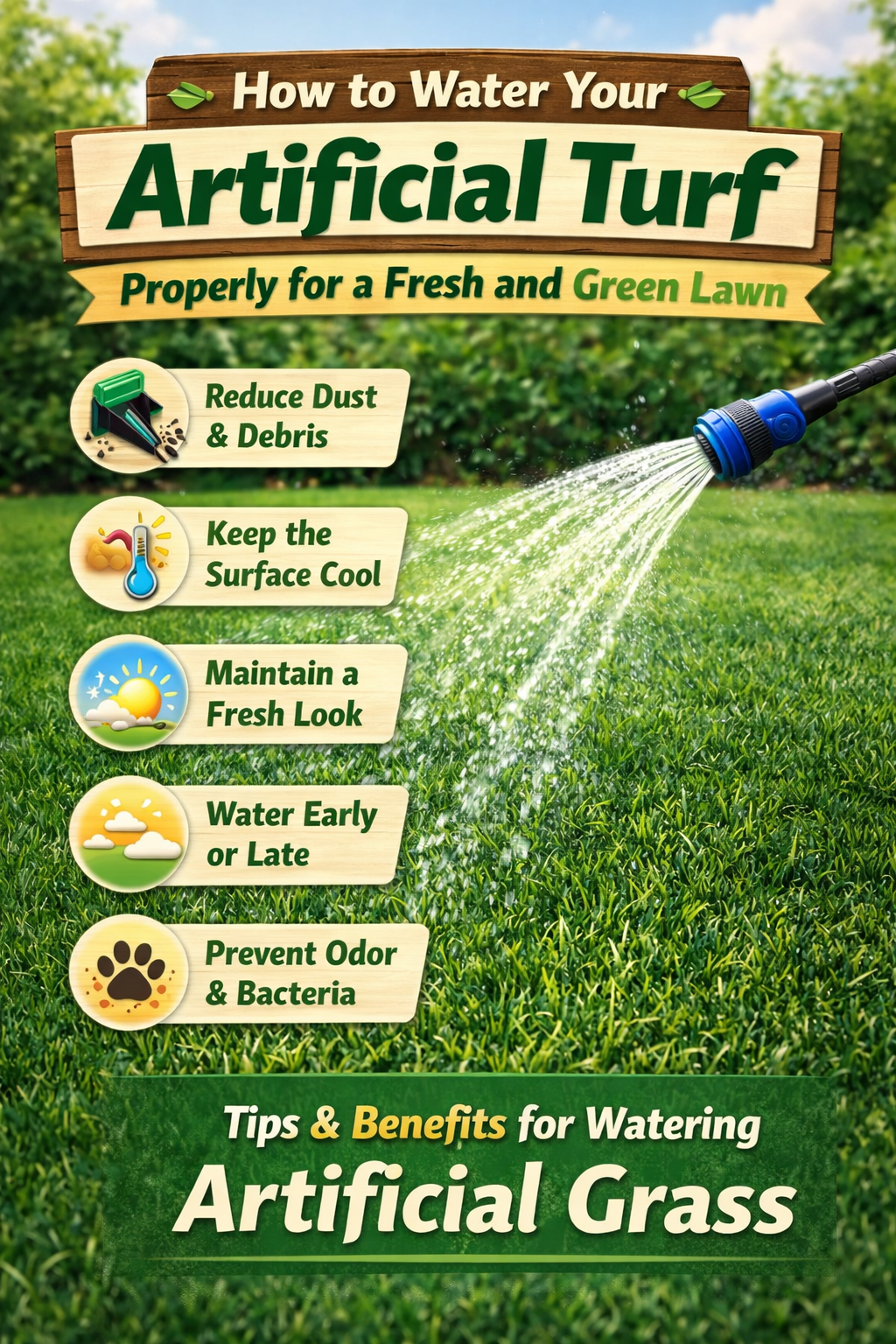
Even though artificial turf doesn’t need water like natural grass, watering your synthetic lawn can help keep it clean, cool, and looking fresh—especially in hot climates. Proper watering also reduces dust, removes debris, and prevents odors, making your turf last longer.
1. Why Watering Artificial Turf Matters
While synthetic grass doesn’t grow, it can accumulate dust, pollen, and pet residues. Lightly rinsing the turf with water:
-
Removes dirt and debris
-
Keeps the surface cool under Nairobi’s hot sun
-
Maintains a fresh, natural appearance
2. Best Time to Water Your Turf
For optimal results, water your turf early in the morning or late in the evening when temperatures are lower. This prevents water from evaporating too quickly and ensures a more effective clean.
3. How to Water Artificial Grass Properly
-
Use a garden hose or sprinkler with a gentle spray
-
Avoid high-pressure water jets that can damage the turf backing
-
Rinse areas frequently used by pets to prevent odor and bacteria buildup
4. Seasonal Turf Watering Tips
-
Dry Season: Rinse regularly to reduce dust and keep fibers upright
-
Rainy Season: Only rinse lightly if needed; remove excess leaves and debris
-
Hot Weather: Frequent light rinses help keep the surface cool and comfortable
5. Benefits of Proper Turf Watering
Consistent and correct watering keeps your artificial turf in top shape, prolongs its lifespan, and makes it safer for pets and children. A well-maintained synthetic lawn always looks vibrant and inviting.